
What Your Air Vents Don’t Show You
Most homeowners rarely see beyond their air vents, so it can be hard to tell what is collecting inside the ductwork. Some dust is normal, but heavy buildup, pest debris or visible mold growth deserves attention. Learn how air duct cleaning affects indoor air and how to decide when professional service is warranted.
Robbins Heating & Air Conditioning has served Farmington and surrounding San Juan County communities since 2003. Backed by decades of hands-on HVAC experience, our team helps homeowners distinguish ordinary household dust from ductwork issues that require professional attention.
What Builds Up Inside Air Ducts?
Dust is an unavoidable part of daily life. It enters from outdoors and collects on clothing, while pet hair and dander introduce additional particles into the home. A properly fitted HVAC filter captures much of what reaches the return vents, but some debris can still settle inside the system.
A light coating of dust does not justify professional cleaning. Air duct cleaning becomes appropriate when:
- Debris blows from the supply registers.
- An inspection reveals heavy buildup.
- Rodents or insects have entered the ductwork.
- Visible mold is confirmed inside the system.
- Dust returns quickly after cleaning and replacing the filter.
Finding the source matters just as much as cleaning the ducts. Unless moisture problems or pest entry points are corrected, the issue will return.
How Air Duct Cleaning Supports Indoor Air Quality
Your HVAC system recirculates air throughout the home, so the condition of the ductwork matters. When heavy debris or pest residue is present, professional cleaning removes it from the system instead of leaving it in the path of moving air.
Cleaner ducts are one part of better indoor air quality, not the entire solution. Effective filtration and moisture control also shape the air you breathe. If dust or odors continue after the ductwork is cleaned, a broader indoor air quality evaluation is the next step.
How Often Should Air Ducts Be Cleaned?
Air ducts should be cleaned as needed rather than on a fixed annual schedule. Cleaning becomes necessary when dust and other debris accumulate inside the system. The sooner that buildup is recognized, the easier it is to keep it from becoming part of the air your family breathes, supporting a cleaner indoor environment.
If you are unsure how often you should clean your air ducts, ask for an inspection during your next HVAC service. Seeing what is actually inside the ductwork provides a far better answer than relying on a date on the calendar.
What Happens During Professional Air Duct Cleaning?
Proper air duct cleaning involves more than vacuuming around the vents. A thorough service follows a clear process:
- Inspect the ductwork. The HVAC professional confirms that cleaning is necessary, identifies the type of ductwork and looks for an underlying cause of the debris.
- Protect the home. Flooring and furnishings near the work areas are covered before equipment is brought inside.
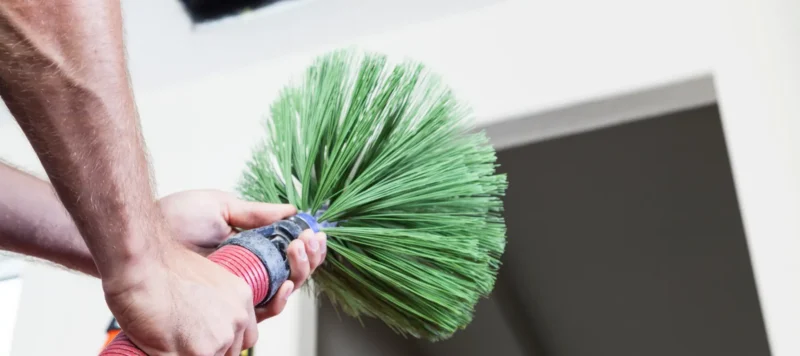
- Loosen and capture debris. Specialized tools dislodge material from the duct surfaces while powerful vacuum equipment collects it.
- Address the full system. A thorough cleaning should include both supply and return ducts, along with HVAC components where dust or debris has built up. If those components are left dirty, they can send contaminants back through the newly cleaned ductwork.
- Review the finished work. Before-and-after images or a visual inspection should show what was found and what was cleaned.
Chemical treatments are sometimes used to address microbial growth, while sealants may be recommended in certain situations to help prevent particles from being released into the air. They are not a standard part of every duct cleaning, so before approving either one, ask why it is needed, what problem it is intended to solve and how it will be used.
Get A Clear Answer About Your Ductwork
If you see debris leaving the registers or suspect a larger problem inside the system, contact Robbins Heating & Air Conditioning. Our team will evaluate your ductwork, explain what we find and recommend service based on the condition of your home.